Showing posts with label tourism. Show all posts

Wednesday, August 06, 2008

Riding the tidal bore on the Gironde! : Mascaret


It is already a year ago when I last wrote about the Dordogne/Gironde Tidal Bore, or the Mascaret, as it is known, and now the season is b back when surfers come from all over the world to dare to surf the Mascaret on the Dordogne and Gironde Rivers.

What can be greater fun than surfing a wave on a river -- riding the wave -- sometimes for as long as 20 minutes? The wave may not be as high as Teahupoo or the Cortez Banks but nowhere in the ocean can you ride one wave for this long.

As this event has become so popular -- and as the surfers of the Mascaret would much prefer to have the wave all to themselves, rather than share it with thousands others - who may not be very good and simply clutter up the space, or who come with their wake boards or their kayaks or even their pesky jet skis, the cognoscenti now keep the best spots to catch the waves at their best a closely guarded secret. And who can blame them?


But -- if you want to come take on the challenge of joining the true lovers of the sport of chasing the tidal bores of the world, here is the time table for the rest of August -- the dates, coefficient of the waves to the tides (close to and over 100 is regarded as the most desirable to ride) and the time of day when the wave will be at its strongest. The spot is on one of the best areas of the Gironde, namely in front of St Pardon:

date -- coef at time --- at ST PARDON
Friday 1 -- 94 at 16h57
Saturday 2 -- 99 at 17h46
Sunday 3 -- 100 at 18h28
Monday 4 -- 95 at 19h06
Tuesday 5 -- 86 at 19h38
. . . . . . . . .
Saturday 16 -- 80 at 16h34
Sunday 17 -- 88 at 17h15
Monday 18 -- 92 at 17h54
Tuesday 19 -- 93 at 18h32
Wednesday 20 -- 90 at 19h08
Thursday 21 -- 84 at 19h42
. . . . . . . . .
Friday 29 -- 85 at 15h57
Saturday 30 -- 96 at 16h38
Sunday 31 -- 101 at 17h22


The mascaret is an exceptional phenomenon which occurs mainly in certain river estuaries during a time when there are spring tides. There are roughly 60 known such sites in the world where this happens. It is also known as a tidal bore. In France this only happens in the Aquitaine -- on the Dordogne, Garonne et Gironde Rivers -- probably, it is believed, because human intervention causing a change of flow of the rivers, for example on the Seine River, prevents mascarets from forming.
In perfect conditions ( a strong coefficient of tide, river flow and low water levels0, the rising tide against the contrary flow of the river causes the start of a series of small waves which can grow into waves of up to 3 metres under the best of conditions. This collection of waves -- about ten at a time, separated by about ten metres, travel at roughly 15 to 30 km per hour. They travel over a distance of more than 150km after which they start dissipating where the current and tides are at their weakest.

The Etymology of the word Mascaret: A Gascony word dating back to the 16th century, boeuf tacheté meaning 'a leaping or galloping cow'.

Other Bores can be found in Canada, China, South America -- the bore on the Amazon River is probably the most spectacular -- and of course, on the Severn in the United Kingdom.

Before the interference on the rivers by man, there were also mascarets on the Charente and the Seine -- where, it is said, the waves reached over 4 metres in height in the middle of the river and up to 7 metres on the river banks!, but today they have all disappeared and only remain on the Garonne, Dordogne and Gironde.


In the Aquitaine, the best sites for the Mascaret are:

- Gironde : behind the island of Margaux (50 cm),
- Garonne : behind the island of d'Arcins, rive right bank (80 cm); between Langoiran and Podensac (2.5 m),
- Dordogne :at Saint-Pardon (2.5 m) a few kilometres from Libourne.

Where best to see them?
**at Saint-Pardon : 45 min before low tide at Libourne.
**at Podensac : 2 hours after low tide at Bordeaux
**at the bridge of d'Arcins : 1 hour after low tide at Bordeaux.


Click on Link:

  • Chateau Lalinde : The perfect venue for your event

  • Relocation Orientation in France


  • Tuesday, August 05, 2008

    Fuel Surcharges - about to hit the tourist industry in more ways than one!


    One of the great advantages of living in the Dordogne is that we are only a short drive away to the nearest airport from where you can catch daily flights to a huge selection of destinations in the Netherlands or United Kingdom. We may not like the way airlines such as Flybe and Ryanair operate, with their dubious no cancellation/no refund policies (and slapping on a massive 'cancellation fee' which precludes them from paying back the taxes - as is dictated by law), but they do make it easy for thousands of people to fly in and out of the Dordogne. People still talk about the 'low cost' airlines and seem not to have notices that there is not much 'low' about the costs these days -- but we still appreciate the fact that we can hop across the channel at a reasonable rate.
    However, in the past month many of the major airlines have been increasing their fuel taxes, which will of course make a significant difference in the total price you pay for an airline ticket. All airlines are expected to announce increases soon and further fuel surcharge increases are also anticipated again later in the year, including some airlines who have already implemented fuel surcharges increases. No doubt the 'low cost' airlines will find some way in which to rub the honey around our mouths -- or sugar the pill -- and yet, I suspect that they just do not care anymore, and the fuel taxes and surcharge was just the excuse they needed to drastically increase their prices. One thing is for certain -- with the Euro being as strong as it is against the Pound and the Dollar, the already slow and dwindling tourist numbers in the Dordogne Perigord are bound to be affected radically, and the local tourist industry is going to have a tough time ahead -- for this is not something that is ever going to be reversed -- and it will be very interesting to see what the governments will do aboutg the situation.........


    Related links:
    Flybe flights to the Dordogne
    Who flies where in France
    Alternative travel: By train


    Click on Link:

  • Chateau Lalinde : The perfect venue for your event

  • Relocation Orientation in France


  • Sunday, August 03, 2008

    Zigou - a 'phenomenon' and living legend!


    Designer, créatrice mobilier fer forgé, d’évènementiels, illustratrice et peintre (dessin, huile, acrylique, pastels)…
    "De Paris à New York
    De Londres à la Dordogne
    De la mode à l’objet
    De la performance à la sculpture, au mobilier d’art
    Le chemin de mes passions à la recherche du «Beau», du Trésor, du Sacré m’a conduit en Dordogne…
    Pour moi la peinture est une poésie visuelle, colorée…
    Je peins par amour de la vie, pour la lumière et la beauté du monde."


    Zigou is a petite little thing -- yet larger than life, with bright red hair that is swept up to one side of her head - or the other, as the mood takes her -- a constant cloud of cigarette smoke like a delicate tulle net softening her features and giving her an appearance of something a little ethereal, not quite of this world.

    She has lived and worked in New York, London, Paris -- with the likes of Bianca Jagger, Andy Worhol, and the rest of the enfants terribles of the late seventies and eighties. She has designed for the world famous, dressed dining rooms for unforgettable dinner parties, creates whimsical garden furniture in delicately wrought iron and gold painted sea shells, teaches children to create beauty -- and her paintings depicting the gorgeous women of the world bear a strong resemblance to the work of Freda Kahlo - and to Zigou herself.

    What I love the most about Zigou - and her work, is her sense of humour and sense of fun. She leaves a blaze of colour in her wake - and once you have had the good fortune to meet this delighful creative and one-of-a-kind dynamo of a woman, you are not likely to ever forget her!


    Contacts pour :
    -Réalisation et conception de stands, mobiliers d’art, illustrations, fresques.
    : conception stands et mobiliers
    : avec Serge de Conti, mobiliers d'art
    : meubles coquillages
    et Cours de peinture pour enfants : cours Atelier enfants


    Click on Link:

  • Chateau Lalinde : The perfect venue for your event

  • Relocation Orientation in France


  • Friday, January 25, 2008

    No better area in France for wine tasting holidays than the Aquitaine


    According to the Aquitaine site, it is clear that one cannot do better than this area for the best wine tasting holidays and Wine Tourism than this province of France.

    In each of the fourteen winegrowing areas in Aquitaine,,wine,region,aquitaine,france.html tourism and wine professionals have undertaken a quality procedure. Each service provider who is a member of ‘Destination Vignobles’ acts as a tourism ambassador with the aim of showing holidaymakers the winegrowing territories of Aquitaine.


    The list of members and practical information are available from the information relay points presented below.

    Take advantage of the commitment of our tourism and wine professionals to enjoy a truly prodigious stay in Aquitaine.


    • To come and share the passion of the growers and taste their wines. « Destination Vignobles » has listed over 1,000 wineries and encompasses top quality brands present in the various areas.

    • To benefit from accommodation with the hallmark of charm.

    • To tour Aquitaine from village to vines, on foot, on a bicycle, on horseback.…

    • To enjoy the friendliness of the population and to take part in the very colourful local festivities.

    Their commitments:

    The members of « Destination Vignobles » have signed a charter of commitments. You will always be welcomed as a very special guest and each and every member will be your special ambassador to guide you in your exploration of the wine-growing areas of Aquitaine.

    Each and every member has chosen to meet a certain number of criteria which form the basis of the quality of service and reception:
    • Observance of opening hours and periods,
    • Information on the languages spoken,
    • Outstanding conditions for visits, wine-tasting, accommodation and food,
    • Availability of tourist information, whereby each member is your key to exploring the area concerned, and also,
    • Easy access, and parking facilities,
    • Spotless condition of all the premises,
    • Price display,
    • Respect for the environment,
    • Inspection by an independent agency,
    • All the commitments already included in their respective professional charters.

    For you, « Destination Vignobles » is a guarantee of quality and confidence. You will easily recognise a listed place by its logo.

    Our networks partners : Vignobles et Chais en Bordelais, the Bergerac Wines Route, the Jurançon Wines Route, Gîtes de France, Clévacances, Logis de France.


    The fourteen areas:

    The numbers mentionned before the territories are there to help you locate them on the map below...


    BORDEAUX
    The gateway to the prestigious wine region, Bordeaux is a city included on the UNESCO World Heritage list since june 2007, to be "tasted" on foot, along its 18th-century quaysides or in the pedestrian streets of the centre. Museums, opera house, welcoming café terraces... and the starting point for a wide variety of excursions to the famous Bordeaux châteaux.
    >> contact: Office de Tourisme de Bordeaux
    12 Cours du XXX juillet
    33000 Bordeaux
    Tel.: +33 (0)5 56 00 66 00
    otb@bordeaux-tourisme.com
    www.bordeaux-tourisme.com
    Guided tours around the vineyards all year long.

    1. BERGERAC The Récollets cloister, set amidst the magnificent half-timbered houses and home to the Bergerac House of Wines, is a superb example of 17th century architecture.
    >> contact: Office de Tourisme de Bergerac Pourpre
    97 rue Neuve d’Argenson
    24100 Bergerac
    Tel.: +33 (0)5 53 57 03 11
    tourisme-bergerac@aquinet.tm.fr
    www.bergerac-tourisme.com

    2. BUZET EN ALBRET This region of châteaux on the border between the Landes and the Gers, much appreciated by the French King Henry IV, is best discovered from the unspoilt and navigable Baïse river.
    >> contact: Office de Tourisme du Pays d’Albret
    7 avenue de Mondenard
    47600 Nérac
    Tel.: +33 (0)5 53 65 27 75
    accueil@albret-tourisme.com
    www.albret-tourisme.com

    3. CHALOSSE TURSAN This historical region of Gascony, nestled between the Adour river and the mountain streams, is home to many picturesque walled towns and the 1st « slim-line » village of Eugénie-les-Bains!
    >> contact: Office de Tourisme d’Aire-sur-l’Adour
    Place du Général de Gaulle - BP 155
    40800 Aire-sur-l’Adour
    Tel.: +33 (0)5 58 71 64 70
    otsi.aire@wanadoo.fr
    www.aire-sur-adour.org

    4. DURAS A region of gently rolling hills and charming villages, dominated by the fortress town of Duras and its magnificent castle.
    >> contact: Maison du Vin de Duras
    BP 13 – Fonratière
    47120 Duras
    Tel.: +33 (0)5 53 94 13 48
    contact@cotesdeduras.com
    www.cotesdeduras.com

    >> Office de Tourisme du Pays de Duras
    Tel.: +33 (0)5 53 93 71 18
    contact@paysdeduras.com
    www.paysdeduras.com

    5. ENTRE-DEUX-MERS The Entre-Deux-Mers, famous for its wines, is also well known for its very rich architectural heritage, with abbeys, walled towns, mediaeval cities, not forgetting the « bicycle resort » of Créon!
    >> contact: Office de Tourisme de l’Entre-deux-Mers
    4 rue Issartier 33580 Monségur
    Tel.: +33 (0)5 56 61 82 73
    info@entredeuxmers.com
    www.entredeuxmers.com

    6. GRAVES SAUTERNES This area immediately brings to mind wines now famous throughout the world and must-see historic châteaux such as the Château of La Brède where Montesquieu was born.
    >> contact: Office de Tourisme du Sauternais, Graves et Pays de Langon
    11 allées Jean Jaurès
    33210 Langon
    Tel.: +33 (0)5 56 63 68 00
    langon@sauternais-graves-langon.com
    www.sauternais-graves-langon.com
    Tourist Map of the Sauternes, Graves and Pays de Langon areas.

    >> Office de Tourisme de Montesquieu
    3 place Marcel Veyssière
    33650 Martillac
    Tel.: +33 (0)5 56 78 47 72
    info@otmontesquieu.com
    www.otmontesquieu.com

    7. HAUTE GIRONDE This area, stretching along the Gironde estuary, is overlooked by two remarkable citadels at Blaye and Bourg-sur-Gironde.
    >> contact: Office de Tourisme de Bourg-sur-Gironde
    Tel.: +33 (0)5 57 68 31 76
    tourismebourg@wanadoo.fr
    www.pays-hautegironde.fr

    >> Office de Tourisme du canton de Blaye
    Tel.: +33 (0)5 57 42 12 09
    officedetourisme.blaye@wanadoo.fr
    www.tourisme-blaye.com

    >> Syndicat Mixte du pays de la Haute Gironde
    32 rue des Maçons - BP 14
    33391 Blaye Cedex
    Tel.: +33 (0)5 57 42 68 90
    tourisme-payshautegironde@wanadoo.fr

    >> Office de Tourisme de Saint-André-de-Cubzac
    Tel.: +33 (0)5 57 43 64 80
    ot.cubzaguais@wanadoo.fr
    www.saint-andre-de-cubzac.com

    8. IROULEGUY The region of Irouléguy, between Saint-Etiennede Baïgorry and Saint-Jean-Pied-de-Port along the route to Santiago de Compostela, is home to a variety of typical Basque villages.
    >> contact: Office de Tourisme de Saint-Jean-Pied-de-Port
    14 place du Général De Gaulle
    64220 Saint-Jean-Pied-de-Port
    Tel.: +33 (0)5 59 37 03 57
    saint.jean.pied.de.port@wanadoo.fr
    www.terre-basque.com

    9. JURANÇON The Jurançon area, with its steep, sun-kissed hillsides, is the ideal place for hiking, riding and cycling … or even for a leisurely drive along the Jurançon wines route.
    >> contact: Route des Vins de Jurançon
    La Commanderie du Jurançon
    64360 Lacommande
    Tel.: +33 (0)5 59 82 70 30
    contact@vins-jurancon.fr
    www.vins-jurancon.fr
    Guidebook: "La route des vins du Jurançon"

    >> Office de Tourisme du Pays de Lacq – Cœur de Béarn
    58 rue du Commerce
    64360 Monein
    Tél. : +33 (0)5 59 12 30 40
    contact@coeurdebearn.com
    www.coeurdebearn.com

    10. MADIRAN This history of this region bears the hallmark of the many mediaeval châteaux and fortresses. Do not forget to visit the castle of Montaner, defended by the famous Gaston Fébus.
    >> contact: Office de Tourisme de Vic-Bilh Montanérès
    38, place du Marché
    64350 Lembeye
    Tel.: +33 (0)5 59 68 28 78
    infovicbilh@free.fr
    www.tourisme-vicbilh.fr
    Guidebook: " Route des chais et Châteaux du Madiran et du Pacherenc du Vic-Bilh"

    11. MARMANDAIS The area around Marmande, made up of hillsides and market gardens, is a paradise en earth for strawberries, asparagus and tomatoes.
    >> contact: Office de Tourisme du Val de Garonne
    Maison du Développement
    Place du Marché BP 305
    47200 Marmande
    Tel.: +33 (0)5 53 64 24 21
    marmande@valdegaronne.com
    www.valdegaronne.com

    12. MÉDOC A drive along its famous châteaux route will enable you to discover the mythical great growths and famous châteaux of this flagship of Aquitaine’s wine-growing regions.
    >> contact: Maison du Tourisme et du Vin de Pauillac
    La Verrerie
    33250 Pauillac
    Tel.: +33 (0)5 56 59 03 08
    mtvp@wanadoo.fr
    www.pauillac-medoc.com
    See also their blog: http://destination-vignobles-en-medoc.blogspot.com
    Guidebook: "Pauillac, l’Escale au Pays des Grands crus" (F/GB/D) et "Destination Vignobles en Médoc" (FR/GB).

    13. PAYS DU LIBOURNAIS
    It is impossible to visit the Libourne area with visiting the wine-growing landscapes of the jurisdiction of Saint-Emilion, a site now listed as part of UNESCO’s world heritage for humanity.
    >> contact: Office de Tourisme de Saint-Emilion
    Place des Créneaux, Le Doyenné
    33330 Saint-Emilion
    Tél. : +33 (0)5 57 55 28 28
    st-emilion.tourisme@wanadoo.fr
    www.saint-emilion-tourisme.com
    Saint Emilion practical guide : list of wine cellars open to the public (FR/GB/D/SP/I/Jap).
    Organization of guided tour in the wine estate

    >> Office de Tourisme de Libourne
    Tel.: +33 (0)5 57 51 15 04
    officedetourismelibourne@wanadoo.fr
    www.libourne-tourisme.com


    Looking for accommodation in the Aquitaine? Look no further:
  • An idyllic stay in a French chateau on the banks of the Dordogne River

  • A beautiful apartment in an historic stone building centrally located in Bordeaux


  • Click on Link:

  • Chateau Lalinde : The perfect venue for your event

  • Relocation Orientation in France



  • Protected nature : Eco Tourism in the Aquitaine : A hundred reasons why this is the best place in Europe to come spend your Summer Holiday in 2008!


    On a wonderful site, Aquitaine - The South at its best which is about this region, there is an excellent article on Eco-Tourism in France. France has always been at the forefront of eco-tourism and managing the fine balance between being one of the most visited and popular tourist destinations of Europe, and preserving the exquisite nature and unique sites that make it so. Aquitaine, France’s third-biggest region, has a multitude of protected natural zones and offers a great variety of sites dedicated to green tourism.


    Starting with… the ocean blue! The Atlantic runs for 250 km along the western side of Aquitaine, with endless beaches of fine sand.

    Surfers, cyclists, enthusiasts of thalassotherapy and ornithology can all enjoy the sea air in all seasons. The MIACA (an inter-ministerial commission for the development of the Atlantic coastline) has protected this area since 1967.

    Heading east from the ocean, you cross the immense pine forest running from the Medoc down to the Landes and the Basque Country, covering a triangle of land 150 km wide and 200 km long.

    It is in this area that lies the Landes de Gascogne Regional Nature Park, and in it, the Maison de la Nature of the Bay of Arcachon (including Le Teich Ornithological Park), the three sites of the Ecomuseum in Marquèze, Moustey and Luxey, and a large number of nature reserves.

    Educational workshops, rides along the cycling tracks or sailing on the natural lakes are all good ways of discovering this area’s many riches.

    Another big “green” area is the Dordogne forestland. In the north of this département, Green Périgord is home to the Aquitaine section of the Périgord-Limousin Regional Nature Park.
    Here you will find a multitude of tree species, including oak, the preferred home of the famous Périgord truffles. Prehistoric Man probably enjoyed this delicacy 400,000 years ago…

    Much further south, don your snowshoes and climb the peaks of the Pyrenees. This is the realm of hiking, fishing and winter sports. Certain plant and animal species often find their last refuge in the Pyrenees National Park.

    Mountains are of course the place where water starts to flow… Torrents - ideal for fishing and white-water sports – which then become rivers and canals. A whole network of inland waterways provide an invitation for barge trips.

    In both the Pyrenees and the Périgord area, natural caves display the underground riches of Aquitaine.

    Lastly, we should not forget the presence all over Aquitaine of parks and gardens, both contemporary and traditional.

    So many sites to discover; so many ways of visiting the beautiful region of Aquitaine.


    Looking for accommodation in the Aquitaine? Look no further:
  • An idyllic stay in a French chateau on the banks of the Dordogne River

  • A beautiful apartment in an historic stone building centrally located in Bordeaux

  • Click on Link:

  • Chateau Lalinde : The perfect venue for your event

  • Relocation Orientation in France


  • Sunday, January 20, 2008

    Finally: In full preparation to walk the Camino!


    "This is the way of peace:
    Overcome evil with good,
    and falsehood with truth,
    and hatred with love."[/i][/b]
    ....Peace Pilgrim


    Why make this pilgrimage?

    I have always had a yearning to do things that challenge me -- to take the road less travelled, to explore the unknown territory. Deciding to walk the Camino de Santiago-- making the pilgrimage to Santiago Compostela, is not taking a road less travelled -- on the contrary -- thousands walk this road every year! Nor is it unknown territory -- it is probably the best known pilgrimage of all time. But for me it will be -- finally taking on this challenge that I had set myself several years ago will be the road less travelled and an unknown territory in my personal life in every sense.`


    Father Frank de Gouveia said:

    “Every major religion has a tradition and practice of pilgrimage.

    Pilgrimage is a ritual journey, either alone or in a group, with the aim of achieving purification, perfection or salvation; a religious experience in which a series of bonds are established between a place of this world and a higher sphere, between an individual traveller and a community, between a flesh-and-blood pilgrim and he who is reborn, purified by the consummation of his goal. These bonds are what distinguish pilgrimage from other types of journey or travel.

    Pilgrimage requires a sacred journey, a sacred place and a sacred goal. The sacred place may take many forms – a tree, a spring, a mountain, or a place where holy relics are revered. On the journey – a metaphor of earthly life – a personal transformation is initiated and effected through a series of rites that culminate in the moment of arrival. Here, his goal attained, the pilgrim is reborn, a new man.
    ”

    All the above refers to pilgrims in the traditional sense. Of course, many people do the camino for other reasons – they may be keen walkers who want to do a truly long walk, they may want to walk on Roman roads or see famous places, they may want to find themselves or ponder the meaning of life and their place in it. They may be religiously motivated or simply look for a spiritual experience. They may hope to find the reason for their need to make the pilgrimage along the way....

    Pilgrims have been travelling to Santiago de Compostela on foot or horseback for over a thousand years. (The Bishop of Le Puy, who went there in AD 950, was one of the first). Some say the cult of the spiritual traveller along the path existed even earlier as the way led to Cape Finisterre the end of the known world.

    The route to Santiago was a Roman trade-route. It was nicknamed by travellers la voje ladee, the Milky Way. It was the road under the stars. The pale arm of the Milky Way that stretched out and pointed the way to the edge of the known world : to Cape Finisterre, and Santiago --- far away under the mists and Atlantic skies of Galicia, woods and water in a Celtic landscape of menhirs and lost gods that exert an appeal that is infinitely pre Christian.

    Its 800 kilometers from the Saint Jean Pied de Port in the foothills of the Pyrenees to Santiago de Compostela in the western reaches of Galicia have changed little in that time. For although sections of it have now become modern tarred roads and many of the refuges and other accommodation set up by religious orders along the way to minister to the needs of pilgrims have long since disappeared, the Camino still passes through the same villages, crosses the same rivers, visits the same chapels, churches, cathedrals and other monuments as did the path taken by our predecessors in centuries gone by.

    At the height of its popularity in the eleventh and twelfth centuries over half a million people a year are said to have made the pilgrimage from different parts of Europe, the majority of them from France.

    The high point of the pilgrimage occurred between the years 1000 and l500 but although numbers dwindled after that, due to the Reformation and other, political, factors, the stream of pilgrims making the trudge westwards to the far reaches of Galiciain north-west Spain never completely dried up and in the late twentieth century is making something of a comeback.

    Several thousand people walk the Way of St James (Sant' Iago) every year, whether from the Pyrenees, from different parts of France or from even further afield: it is not uncommon, even nowadays, to meet Swiss, German, Belgian or Dutch pilgrims, for example, who have set out from home to make the entire journey on foot. The Cathedral authorities in Santiago maintain a register of pilgrims and in 1991 recorded a total of 7274 travelling on foot, bicycle or horseback (compared with 5760 in 1989, the year of the Pope's August visit there, and 4918 in 1990).


    Click on Link:
  • The Pilgrimage

  • Home stay in a chateau: On the way of the Camino


  • Chateau Lalinde : The perfect venue for your event

  • Relocation Orientation in France


  • Saturday, November 17, 2007

    A great new magazine in the Dordogne


    I recently came across a magazine - freely on offer on the counter of my little supermarket -- that I took home and read from cover to cover - finding the articles pertinent, well written and informative, and presented in a reader-friendly and attractive way.

    In a market already well-supplied with various how-to and setting-you-on-your-way publications, this one appealed to me. It contains just enough to take in in one go.

    Expats have no shortage of helpful publications, but often they are so packed with so much information that it is impossible to remember half of it -- let alone remember where to go look for it again when you need the information.

    "Impressions" has just enough of a variety of things, and with the clearly defined content, coming back to the correct copy which contains the specific information you will need some time in the future, should be a diddle.

    I decided to go look for the person behind this lovely little magazine, "Impressions".

    Jon Burton is the man, and he was ready to tell me more:

    A: Thank you for your kind words regarding Impressions magazine.
    The magazine was launched in April 2003 in the Deux Sèvres department of the Poitou
    - Charentes. Its aim was to help integration between the French and English speaking communities, promote local attractions and events and to promote both French and English speaking registered artisans. Impressions magazine carries both feature and general interest articles making it different to the likes of French News, Connexions and Sud Ouest which are predominately current affairs newspapers.

    Impressions magazine expanded rapidly in the Deux Sèvres and soon was being distributed in all departments of the Poitou Charentes. It now has a content of 28 pages, a readership of over 20,000 and carries 60+ advertisers.

    Q: So it is not a new magazine?

    A: No, in the Dordogne it is, but as a magazine it is already well established ---- In fact, it is now in its fifth year.

    Q: You say there are 60+ advertisers. Yet reading the magazine, one does not get that 'crowded' feeling with too many advertisements competing for space with the articles.

    A: That is good, because it really is a symbiotic relationship ---- the advertisers are not only important to us, but to the reader as well, as they are the people that make up the networking system of the expat in his new home. And of course, the magazine is wholly funded by advertising revenue, keeping it free to the reader ----- thus generating greater exposure for the advertiser. Impressions magazine also has a large subscriber base of readers who have the magazine delivered to their door throughout the world. Being a well-established magazine already, it has become a much relied upon and successful medium and has many advertisers who have been advertising from issue one including Century 21, AXA insurance and local Notaires.

    Q: Interesting, because it is not a very 'big' magazine.

    A: Yes, but we are confident we can replicate the success of the magazine here in the Dordogne and believe that Impressions magazine will be a good medium for businesses to advertise at a lower cost than other publications. --- Although Impressions magazine is starting as a 12 page magazine for the Dordogne edition, this is expected to increase in size rapidly.

    Q: Ah! I hope not too big -- because that is exactly what I found was unique about it and made it so attractive to me as the reader -- the 'digestible' size!

    A: And its availability, I hope! -----We are also pleased to announce that we have signed a partnership agreement with the Chambre de Commerce et Industry of Dordogne and the Bergerac Airport Authority. This will ensure that the magazine will be made available to a wider audience hence offering better coverage for advertisers.

    As well as being available in the Arrival and Departure Halls at Bergerac Airport, 3000 copies of Impressions magazine will be distributed in restaurants, bars, tabacs, banks, supermarkets, immobiliers, Office de Tourisme and insurance offices, initially throughout the areas of:- Riberac, Bergerac, Eymet, Lalinde, Monbazillac, Saint Foy and Mussidan.

    We wish Impressions much success in the Perigord Dordogne ---
    Look out for it wherever you are and have a look for yourself --
    and do let us know what you think about it!


    Click on Link:

  • Chateau Lalinde : The perfect venue for your event

  • Relocation Orientation in France


  • Wednesday, November 14, 2007

    November in France ; The true test for Sarkozy's strength as leader?


    As a supporter of a strong leadership for France in Sarkozy, I have, along with the rest of the population, been watching avidly what is to transpire this month in France. There are strikes looming of mammoth proportions -- strikes that will affect everyone, wherever they are in France. Tourism, that has enjoyed such a boom, will be badly affected. The news channels show little else than spot interviews with the citoyens in the streets, the flag and banner waving leftists, the wise old owls in the grands salons of the capitol -- the overall judgement seeming to be that Sarkozy has to stand strong and finish what he set out to do the day he stepped into the role as France's President.

    When one considers the radical changes his government announced, it is not surprising that, in a country where the people say what they think -- and be assured, they do think -- will take to the streets and voice their opinions -- albeit in the form of strikes and demonstrations. It is good that this happens -- it is good that there is a strong political awareness and a sense of freedom of speech, especially under an exceptionally strong leadership.

    So, it was just a matter of time for the strikes and the demonstrations to start.

    And yet -- as I said, we will all be affected -- and affected quite noticeably -- and where it hurts. The country's economy needs a push badly, and many of the changes put in action are exactly aimed to do that. But grinding the country's transport to a halt, will not only set back the timing schedule of the proposed changes and resulting improvements and growth, it could cripple the country to such an extent that the proposed changes may have to be put on the back burner for too long a time.

    The next month will be the deciding moment -- when the work force of France and their chosen leader come face to face in a battle of wills. The virtual - albeit temporary demise of the Socialists -- interesting that it is the Communist leaders' opinions that are now sought in radio and television debates --- and therefore the absence of their strong support to the strikers, could well be what swings the odds in favour of the president. However, my naive political idealism would hope that reason will truimph in the end and that it will be Sarkozy's strength of conviction that will persuade the union leaders and their rent-a-crowd followers that even if change is painful for the moment, the result will be to everyone's benefit.

    And as for the students that are planning to strike too? My advice to them is to grow up. A handful of people who are looking for personal fame are leading you by the nose -- because they know that can! Go attend your lectures, finish your studies and then take your place in the arena of the leaders of your country and there -- and only then -- you will make a difference in the world.

    On the Expatica site, Hannah Westley gives this comprehensive synopsis of what is de rigueur in France this November. (an extract)

    "Editor’s Diary - Black November

    So we’re in for a chaotic few days, perhaps even a few weeks, as the unions and the public sector flex their muscle in the face of President Sarkozy’s promised pension reforms.

    The indefinite strike will hit the national railway company SNCF starting Tuesday evening and the RATP, which runs Paris’ metros and buses, the following day. Union members at power and gas utilities also plan to join in. Meanwhile, student unions are rejecting plans to make universities more autonomous and are also joining the protests. Later in the month, millions of civil servants, including teachers, are set to go on strike on November 20 to oppose planned public-sector job cuts. Judges and courtroom staff will also go on strike on November 29 to protest against a reform of the judicial map of France.

    Many of us expats will bemoan the extra complications all this strike action entails: getting to work on time, if at all, the traffic, lack of parking spaces, weekends away that have to be cancelled. According to a poll published last week, a majority of the French will be complaining too: 69 per cent of the French are said to support the government’s strong stance.

    In an interview with Journal de Dimanche, Prime Minister François Fillon said the government’s latest proposals are non-negotiable: “In the past, we’ve presented reform projects that were too ambitious, and finally we relented and were left with only an illusion of reform… We no longer want that. We’ve presented a reasonable project. The status quo is no longer possible.”

    This week could be the real test of Sarkozy’s resolve and the political vultures are already watching and waiting. For those of you who have missed the fun, here’s what some of the press is saying:

    For the International Herald Tribune, Sarkozy is already putting his legacy on the line: “If he surrenders to strikers planning to bring France to a halt in the coming days and weeks, his reformist credentials may end up irrevocably damaged. If he holds firm against stubborn unions, he stands a chance of joining the ranks of Margaret Thatcher and Ronald Reagan as a leader who forced momentous change on a nation in bad need of an overhaul. Crucially, the reform-resistant French public may this time take Sarkozy’s side.”

    The Independent sees Sarkozy and his Prime Minister François Fillon playing out a bizarre soft cop-hard cop double-act: “President Sarkozy and his Prime Minister, M. Fillon has repeatedly stated that there can be no turning back, especially in the symbolic reduction of the special pension rights of railwaymen, power workers and other public sector employees. President Sarkozy, meanwhile, has tried to play the role of a more understanding fairy Godfather. He turned up at one of the most militant railway workshops in Paris and told the startled railwaymen that the cuts in pension rights would apply only to newly hired staff. This was more than even most of the eight railway unions had demanded. The government rapidly shunted the President’s words into a siding.”

    For The Times, this is Sarkozy’s “Thatcher moment” as the strikes aim “to break his drive to purge France of its old economic ills.”


    Click on Link:

  • Chateau Lalinde : The perfect venue for your event

  • Relocation Orientation in France


  • Tuesday, November 13, 2007

    Picnics in the Dordogne


    The regret with which too many tourists leave this wonderful and diverse part of La Belle France, is that they had not planned on enough time in the region. Not only are there a myriad of sites to visit -- each in its own right a must-see --, castles to admire, restaurants to enjoy, bastides to wander around in, caves to explore, there is the best cycling to be had (according to recent seasoned cyclists from Canada and visitors to Chateau Lalinde: "streets (forgive the pun) ahead of anything that the overcrowded Tuscany has to offer!"), the best hiking and trailing to be done, golfing, canoeing, hot air ballooning........ the list goes on, but then there are also those hidden little treasures -- the ones one rarely plan for, but which, if you are lucky, just happens...........

    Yes! One of the great joys for me of living in such a beautiful countryside as this, are the picnics! Any day, any time, any occasion is a good one on which to have a picnic -- there are so many little spots and perfect little places to throw down the blanket, open the champagne, unpack the basket and enjoy communing with nature.
    And when better than on a late autumn day? Who better with than a couple of good friends from Nantes? And where better than at the foot of the imposing Beynac castle with the majestic Dordogne River flowing past below and a range of forests and other chateaux to admire?


    Click on Link:

  • Chateau Lalinde : The perfect venue for your event

  • Relocation Orientation in France


  • Wednesday, October 31, 2007

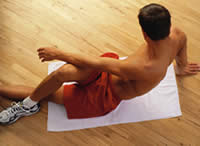
    Keeping fit and healthy in the Dordogne : From Pilates to Fencing


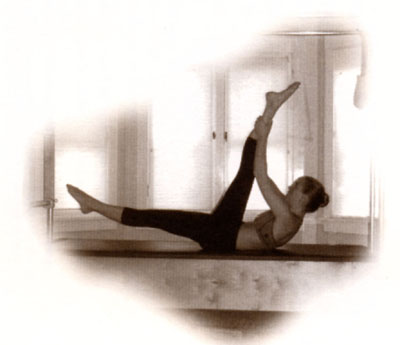
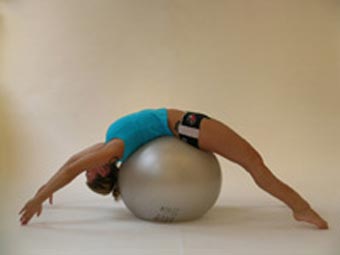
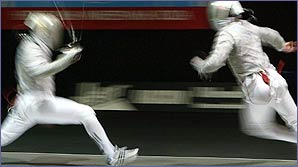
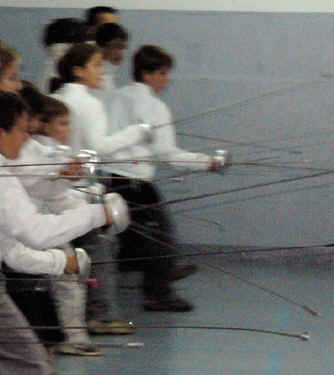
    If you are looking for an activity holiday or simply the most enjoyable and most efficient way to get and keep fit and healthy, there cannot be too many forms of exercise that fit the bill better than Pilates and Fencing - and especially when the instructors are as good -- and as charming as Robyn and Patrick!

    So, what exactly IS this Pilates phenomenon?

    It is an Exercise in Balance : "I must be right. Never an aspirin. Never injured a day in my life. The whole country, the whole world, should be doing my exercises. They'd be happier.", said Jo Pilates in 1965, at the age of 86.

    Well, maybe not the whole world, but certainly much of it is experiencing the explosion in demand for Pilates, a method of exercise and physical movement designed to stretch, strengthen, and balance the body. With systematic practice of specific exercises coupled with focused breathing patterns, Pilates has proven itself invaluable not only as a fitness endeavour itself, but also as an important adjunct to professional sports training and physical rehabilitation of all kinds.

    Widely embraced among dancers for years, the exercises--"elephant," "swan", the language--"pull navel to spine, find the core connection! and breeaaaathe," and the look--bright-eyed, refreshed, buoyant-without-necessarily-sweating, is popping up in fitness classes, physical therapy offices, corporate retreats, luxury spas and wellness centers across the country. Another fad? A cult for the over-privileged? Think again. With the aging of our world population and the increasing trend toward mindful, moderate health practices, Pilates is more likely to find itself with a wait list at the YMCA, and in your local public schools--shaping the fitness ideals of our next generation. Practiced faithfully, Pilates yields numerous benefits. Increased lung capacity and circulation through deep, healthy breathing is a primary focus. Strength and flexibility, particularly of the abdomen and back muscles, coordination-both muscular and mental, are key components in an effective Pilates program. Posture, balance, and core strength are all heartily increased. Bone density and joint health improve, and many experience positive body awareness for the first time. Pilates teaches balance and control of the body, and that capacity spills over into other areas of one's life.

    If you are like myself - someone who hates aerobics with a passion, finds doing the circuit in gym beneficial and satisfying -- but utterly boring, but rrealises that a good form of exervice is absolutely crucial to keeping fit, supple and healthy, then look no further: the day you discover Pilates, a new world will open up for you!

    And now Pilates has come to the Dordogne as well! Robyn Haigh, from Lalinde,is a well established Pilates teacher in Lalinde as well as in Eymet and the larger Dordogne Perigord. She works both with groups and in one-on-one classes.


    And Fencing? Did that activity not go out with the Three Musketeers?

    No! Not at all! Fencing, or l'Escrime, became very popular again in France during the last few years -- especially after the 2004 Olympic Games when the French won the most gold medals for fencing.
    Fencing is a is a fantastic way to improve balance, co-ordination and flexibility - and it's great fun as well!

    There are three types of fencing - epee, foils and sabre.
    In all three, weapons are wired electronically to record when a hit is scored.
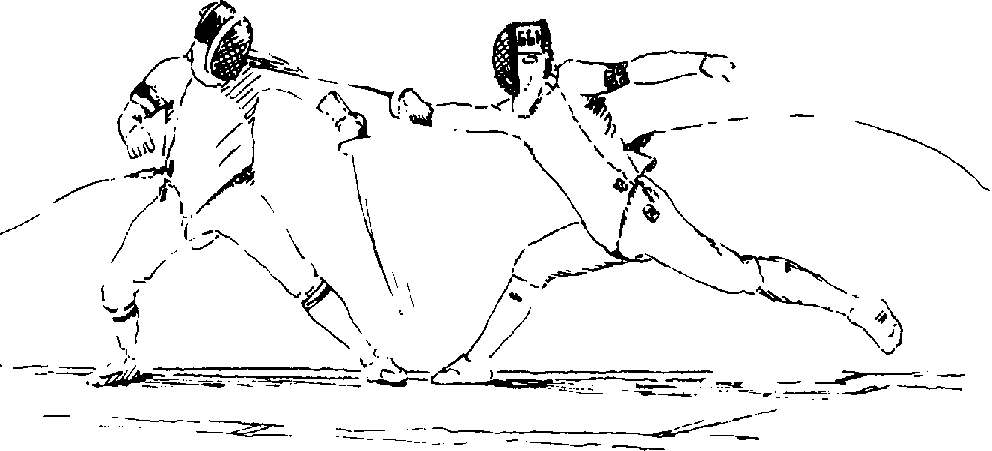
    In foils and epee, points can only be scored by the point of the weapon hitting. In the case of the foil, only a hit on the torso counts. In the epee, the whole body is the target. In sabre, points can also be scored by hitting the arms and head.
    As well as the three different types of sword, fencers also need protective clothing, including a wire mesh face guard.
    A metallic over jacket is also worn. This is placed over the scoring area and conducts electricity. Every time a valid hit is scored a lamp lights up on the scoring equipment.

    Fencing originated as the practice of swordsmanship to prepare men for duels and warfare. A fencing match is depicted on an Egyptian temple that dates to about 1190 B.C. and the ancient Babylonians, Greeks, Persians, and Romans all had some form of fencing. The use of armour during the Middle Ages made swordsmanship virtually obsolete. The broadsword was used against armour, but only as a crude hacking device requiring sheer strength rather than skill. By making armour obsolete, the development of firearms ironically brought swordplay back into prominence during the 15th century. Soldiers once again had to acquire some skill with the sword, and fencing also emerged as a pastime for gentlemen. Fencing masters organized guilds, which taught various moves to initiates while protecting them as trade secrets from outsiders.


    Fencing as an exercise based on speed and skill began when the longer, lighter rapier was developed in Italy during the 16th century. Because of the rapier's length, opponents had to fight at a distance and quick but controlled lunges, attacking the enemy with the point of the sword, replaced cruder hacking techniques. But the rapier wasn't a good defensive weapon, so the fencer often had to use his gauntleted left hand to parry his opponent's thrusts.

    Under Louis XIV in France, a change in fashion led to a new kind of sword. The rapier simply didn't go well with brocaded jackets, breeches, and silk stockings, so French courtiers began wearing a shorter sword. The court sword, as it was known, turned out to be an excellent weapon for fencing because it was both lighter and stronger than the rapier, so it could be used for defense as well as offense. As a result, the modern one-handed fencing technique developed, with the left hand and arm used primarily for balance.


    A special version of the court sword, the foil, was developed for practice. Meanwhile, another type of sword, the colichemarde, had been created for duelling. The blade had a triangular cross-section, with slightly concave sides to reduce weight without reducing strength. The colichemarde evolved into the modern epee.

    The third of the fencing weapons, the saber, was introduced into Europe in the late 18th century as an adaptation of the Turkish scimitar, used by the Hungarian cavalry. It was so effective that other armies began using it and another variation, the cutlass, became a standard naval weapon.

    The saber was originally a very heavy, curved sword, but a lighter, more easily wielded weapon with only a slight bend was developed in Italy late in the 19th century for duelling and fencing. The modern fencing weapon is straight, like the foil and epee, but it still has one cutting edge which can be used to make hits on an opponent.

    Fencing is one of only four sports that have been on every modern Olympic program since 1896. The Fédération Internationale d'Escrime, founded in 1913 to standardize rules, is the governing body for international fencing, including the Olympics.

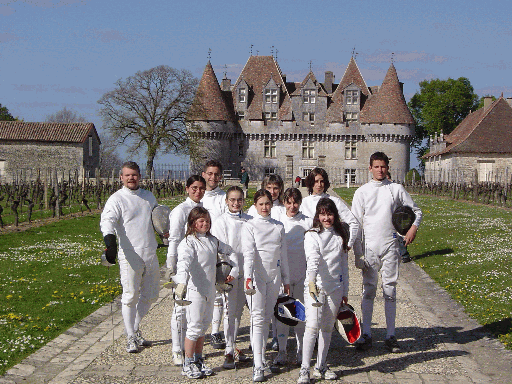
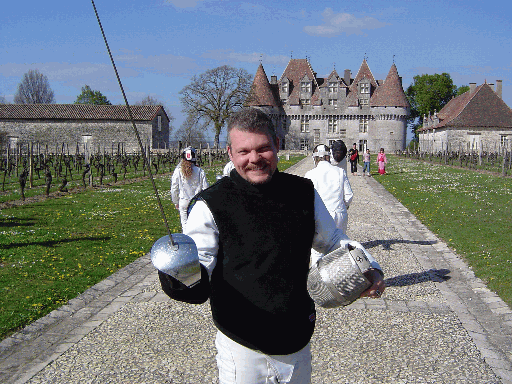
    There are fencing studios for anyone, from beginner to professional, in various centres in the Perigord -- the Cadets de Bergerac in Bergerac, of course!, with a studio in Eymet as well. To find out more and to find a class close to you, contact Patrick Wynn-Simmonds.
    Patrick is a sabreur(sabre fencer), and has received many wonderful medals and awards and acclaim at the Championnats de France and other European events.
    Last year he also became Champion d'Aquitaine (Vétéran V1 Individuelle) at Mont de Marsan at the Championnats de Ligue Vétéran, again at Epée --- and after beating the Maitre d'armes of Périgueux in the quarter finals, and his club president in the semi!


    Click on Link:
  • Fencing in Bergerac : Contact Patrick

  • Pilates Classes : Contact Robyn : 0553 633175


  • Click on Link:

  • Chateau Lalinde : The perfect venue for your event

  • Relocation Orientation in France

  • Francophiles living in France


  • Monday, October 29, 2007

    A Feast for Obelix: The wild boar of Mortemart


    About 30 minutes' drive from Lalinde, one could very easily imagine oneself in an Asterix comic strip: there, in the oak forests of the Perigord-Dordogne is a place that Obelix had obviously never heard about, or else it would not exist! --- a wild boar farm where no fewer than some 500 wild boar roam the hills.


    Mortemart Ferme des Sangliers is a beautiful spot against the forested hills where one can wander along the little pathways between the well-fenced enclosures and enjoy watching the antics of the large herds of wild boar.
    The boars are farmed for their meat, and at the end of your visit, you can taste the delicious products made from wild boar and the marcasin -- the young piglets: rillettes (the fatty soft meat 'spread'), terrines,sausages, and tinned braised and roast boar. Other products are the best ever hair brushes, back brushes and paint brushes made from the strong hairs of its fur.
    For a few Euros, this is definitely a visit that is well worth while. The farm is open right through summer and over weekends during the winter.

    Click on Link:

  • Chateau Lalinde : The perfect venue for your event

  • Relocation Orientation in France


  • Tuesday, August 21, 2007

    Food writing that leaves a bitter after taste...

    In an article he titles "When food tribes go abroad", Jay Rayner of the Observer Food Monthly, gives a somewhat bitter and twisted view of any- and everyone who ventures across the channel to come and enjoy the different lifestyle of life in La Belle France.

    He starts off well --- "Holiday eating is like holiday sex: nowhere near as exotic as you think it's going to be but just as risky. You can pick up a dose of something very nasty doing both. My parents, siblings and I still talk fondly of the violent food poisoning we acquired in some dodgy cantina on Ibiza. We were all taken out by it, one by one, within hours. Oh, how we laughed."

    He continues to make an astute remark: "These things happen, of course - but they carry such significance on holiday because our expectations are so damn high. We insist that everything be wondrously lovely and this makes us behave very oddly indeed where food is concerned. The meal at the end of a day is an expression of who we are, of how we like to imagine our true selves to be."

    But then his not-so-sub-conscious envy of all who have the good fortune to come to this part of the world to sample the gastronomic delights -- and disasters -- of a foreign and different culture, bubbles to the top and forms an unsightly and distasteful scum which completely covers any other possible tasty bits that may still have been underneath -- and as much as I tried to skim it off, hoping to reveal something that would reveal a tongue-in-cheek soupcon of dry humour, even if somewhat twisted, there was none. Just a bitter brew -- with a strong flavour of sour grapes.

    "After some rigorous research, I have been able to sort the modern British gastro-traveller into five distinct, and equally irritating, categories. And they start with ...

    1. The Dordogne Bore

    Dordogne Bores have been holidaying in crumbling gites around Bergerac for the last two decades. They insist on calling it Périgord, and throw around words like 'paysanne' and 'terroir' to bolster their foodie credentials. They also claim to have a handful of their own 'secret' little places where they go to eat; restaurants so far off the beaten track that their location is known only by 23,000 other people from Dorking, Guildford and Cheltenham.

    What the DB will never recognise is that every single restaurant in the region serves exactly the same bloody food: duck confit, foie gras, more duck confit, herb omelettes, duck confit and more duck bloody confit. What's more, 85 per cent of the restaurants will serve mediocre versions of these dishes, though the DB will either not notice or not acknowledge this. Usually this is because they are plastered on cheap wine, arguing that you don't have to spend big money 'down here' to get good wine. This, too, is nonsense. No matter; they will praise the 'civilised' French attitude to drinking, while failing to recognise that France has one of the highest rates of alcohol-induced liver disease in Europe.
    Most likely to be found in: the Dordogne, natch; the Lot and Garonne; Tuscany.

    2. The Authenticity Addicts

    The AA is convinced that only by eating exactly what the locals eat can they really connect with the culture they are visiting. This means they end up consuming some of the nastiest food items ever devised, though they will always claim to really, really like them: stews made from goat intestines; braised cow's udder; pressed pig's ear in vinegar. What the AA fails to recognise is that renowned local dishes like these are almost always the product of poverty, and therefore generally more a matter of necessity than tastiness.
    Most likely to be found in: India; China; Thailand; and the more wretched, typhus-sodden corners of the former Soviet Union.

    3. The Anything-with-a-View Crew

    Everybody knows that the worst restaurants in any fishing town are the ones right on the water, where the smell of food is undercut by the foul stench of the stagnant sea-bilge lip-lapping at the harbourside. The owners of these prime pitches know that the punters will come solely for the location, so they don't have to worry about the quality of the food, plus they can also charge the suckers roughly double what those places a street back are charging.

    The AWAVC will happily leave the beach at five in the afternoon to drive two hours into the mountains to this 'fabulous little bistro with the most fantastic view of the sunset', forgetting that, after the first half hour, the sun will have indeed set and that they will then be eating their mediocre dinner in total darkness.
    Most likely to be found in: the Greek islands; Provence; Sardinia.

    4. The Gastro Tourist

    The GT regards a holiday as an eating opportunity, and time spent on the beach between lunch and dinner as an irritating distraction. The GT needs only one holiday read - the Michelin Guide, and will tick off restaurants as they go. But few of the meals they pay astronomical sums for will meet with their approval, as the GT has shockingly high standards and cannot be conned by gastronomic smoke and mirrors.
    Most likely to be found in: Burgundy; around Lyon; northern Spain near San Sebastian; Catalonia.

    5. The Market Kings

    Market Kings stay in villas or gites and never eat out because, as they insist, loudly and often, 'really, why would you when the produce in the markets here is so fabulous, I mean look at the tomatoes nothing like the flavourless rubbish you get back home and the peppers are so sweet you could eat them for dessert. Here try some of the bread - it's made by a local man who's 103, blind, incontinent and crippled by arthritis but he's still got the touch ...'
    The MK gets up every morning at six to go to the local village to buy their produce (even though exactly the same stuff is available at half the price at Carrefour nearby).
    Most likely to be found in: Tuscany; Dordogne; Provence."


    The Observer Food Monthly would do well to send Mr Rayner on one of our excellent Relocation Orientation courses at the Chateau Lalinde before allowing him to write another article about something he knows so little about or on which he holds such prejudiced -- or should I say, 'jaundiced' views; and Jay Rayner would do well to forget about the frissons of 'risky sex' in Ibiza and rather come enjoy a heavenly few days in -- yes! the Périgord, also known as the Dordogne, and soon officially to be known as Dordogne Périgord -- where we will initiate him into the true pleasures of life -- which I can guarantee will exclude anything boring, but include a fair few pleasurable hours of fine dining with interesting people and stimulating conversation.


    POST SCRIPT: See Jay Rayner's response in comments below.

    Click on Link:

  • Chateau Lalinde : The perfect venue for your event

  • Relocation Orientation in France


  • Wednesday, August 15, 2007

    Cooking up a storm............in a tea cup?


    A little like the Aesop fable of the stork and the jackal inviting each other to dinner................

    It is not a summit, not even a working lunch. Just a social meal between two world leaders who happen to be vacationing near each other in New England?

    By welcoming Sarkozy to his parents' seaside home, Bush might have been hoping to lay a foundation for what he hopes are drastically improved relations with France over the reaminder of his term.

    The fact that Cecilia and her children cried off sick, probably showed what she thought of the whole thing -- and good for her for standing her ground too!

    And yes --- "It would be impossible to think of Jacques Chirac stopping by Kennebunkport for lunch. This speaks volumes for the desires on both sides to try to turn the page." -- as an analyst remarked.

    But then -- to serve hot dogs and hamburgers to your guest? Especially a guest who happens to be a French head of state? A French head of state who also happens to be a fitness and health fanatic??


    Apparently Sarkozy promised Bush that the United States "can count on our friendship," --- and reminded Bush that friendship means respecting differing views.

    Perhaps that was why the side dish was baked beans and not "Liberty Fries" (the new name for French fries - since the French would not go fight in Iraq....)

    But I still wonder if Bush will be given frogs' legs and garlic snails when he comes to visit the French president?.......


    Click on Link:

  • Chateau Lalinde : The perfect venue for your event

  • Relocation Orientation in France


  • Tuesday, August 14, 2007

    The Orpheus and Bacchus Music and Wine Festival, St Emilion and Bordeaux


    Travel Video and TV News report:

    Music and Markets Offers Sumptuous Bordeaux Fall Getaway

    Fall into the ultimate French getaway – luxuriating in Bordeaux’s renowned wine country and imbibing inimitable wine, food, music and guests on this, their most splendid tour, a sumptuous autumn escape to Bordeaux. This week-long getaway includes a rejuvenating grape-treatment spa, delectable haute cuisine, world-class wines (of course!), and best of all, mingling with internationally recognized musicians throughout the day before hearing them perform in an intimate soirée setting.

    Throughout the week, guests will indulge in a lavish menu of cultural and gastronomic pleasures. The first night is spent delightfully decompressing amid the vineyards of the Château Smith Haut Lafitte at the Sources de Caudalie Hotel and spa.

    The next day, guests can relax and refresh during a morning of pampering at the renowned Caudalie Vinotherapie Spa, before departing for St. Emilion, a medieval village set above the Dordogne River valley and surrounded by chateaux and vineyards. Postcard perfection awaits as guests can stroll the cobblestone streets, enjoy an aromatic pause at a patisserie, tuck into a boutique or two, and select a bottle of wine at a town vintner. Then in the evening, epicurean delights await during dinner at a former Cardinal’s palace, now a gracious hotel and restaurant inside the ramparts of the historic village, a Unesco World Heritage site.

    For the next four days, as part of the Orpheus and Bacchus Music and Wine Festival, guests will continue to discover the lush beauty and culinary riches of the region, following the route du vin through the oft-toasted vineyards of Bordeaux at harvest time, and can either test their culinary prowess during a hands-on cooking class with Chef Georges, sniff, swish and swirl at a wine-tasting class with a Master of Wine, or just absorb the distinct pleasures of the treasure-filled villages of the region. Other activities include an insider’s visit to a winery that will allow guests to learn about the intricacies of quality wine making, and purchase, if they’d like, wines direct from the viticulteur.

    It is the evening entertainment; however, that sets this Bordeaux getaway apart from all others. In the midst of stellar vineyards is the home of the Orpheus and Bacchus Music and Wine Festival, owned and organized by Ian Christians. Here guests will enjoy his bubbly house party with world-class musicians and fellow music lovers, sharing many a bon soir mingling with other guests, savoring hors d’oeuvres and aperitifs before stepping into the salon, La Musique, where artists introduce the works they’ve prepared for the evening. The grand venue, originally designed in the 1700s as a celebration hall for the vendage, boasts wonderful oak beams, stone-arched windows, and a splendid Steinway, owned previously by renowned pianist Alfred Brendel.

    The artistry continues, as Chef Georges Gotrand presents his culinary masterpieces at a candlelit dinner table. Georges introduces each evening’s palate-pleasing menu, and the resident Master of Wine provides expert commentary about the wines and the rationale for the pairings. After the main course, guests return to the salon for a shorter, less formal concert before completing the evening with an abundant array of cheeses, as well as dessert and coffee.

    This captivating combination of fine food and wine, marvelous music, and plenty of pampering – all in a lush French countryside setting – begins October 5 and is priced at $4450 per person. Each Music and Markets tour is limited to no more than 10 people, allowing each participant to receive personal service and attention that’s often unavailable on other tour packages.

    For more information about the Music and Markets in Bordeaux tour, or any other
    Music and Markets offering, contact us here.

    Related articles:
    Bordeaux
    Canadian Resort near St Emilion
    Bordeaux
    Tourism and Porperty in France
    Wine tasting weekends in Bordaux


    Click on Link:

  • Chateau Lalinde : The perfect venue for your event

  • Relocation Orientation in France


  • Friday, August 03, 2007

    Back home!


    It feels as if I have been away forever -- flying around the world and experiencing the most amazing things along the way.

    -- but it is good to back next to the Dordogne, the sound of the river waking me in morning, the farmers setting up their stalls for the morning market, the ducks squabbling below my window, the swans gliding serenely by (still no sign of little ones!), many of the fields that were lush and green when I left, now harvested and bare..............

    But the tourists have arrived! In their thousands. Cars clogging up the bridge, people milling about, queues outside anything that looks like it could be worthwhile writing home about......... I had forgotten what August was like in the Southwest of France!

    And this afternoon the first of my guests arrive -- and once again Chateau Lalinde will be humming with excited voices and laughter and people enjoying the pure pleasure of discovering the wonder of opening their bedroom windows onto the magnificent view of the Dordogne river!


    Click on Link:

  • Chateau Lalinde : The perfect venue for your event

  • Relocation Orientation in France